
In Any Language: The Universal Art of the Handwritten Note
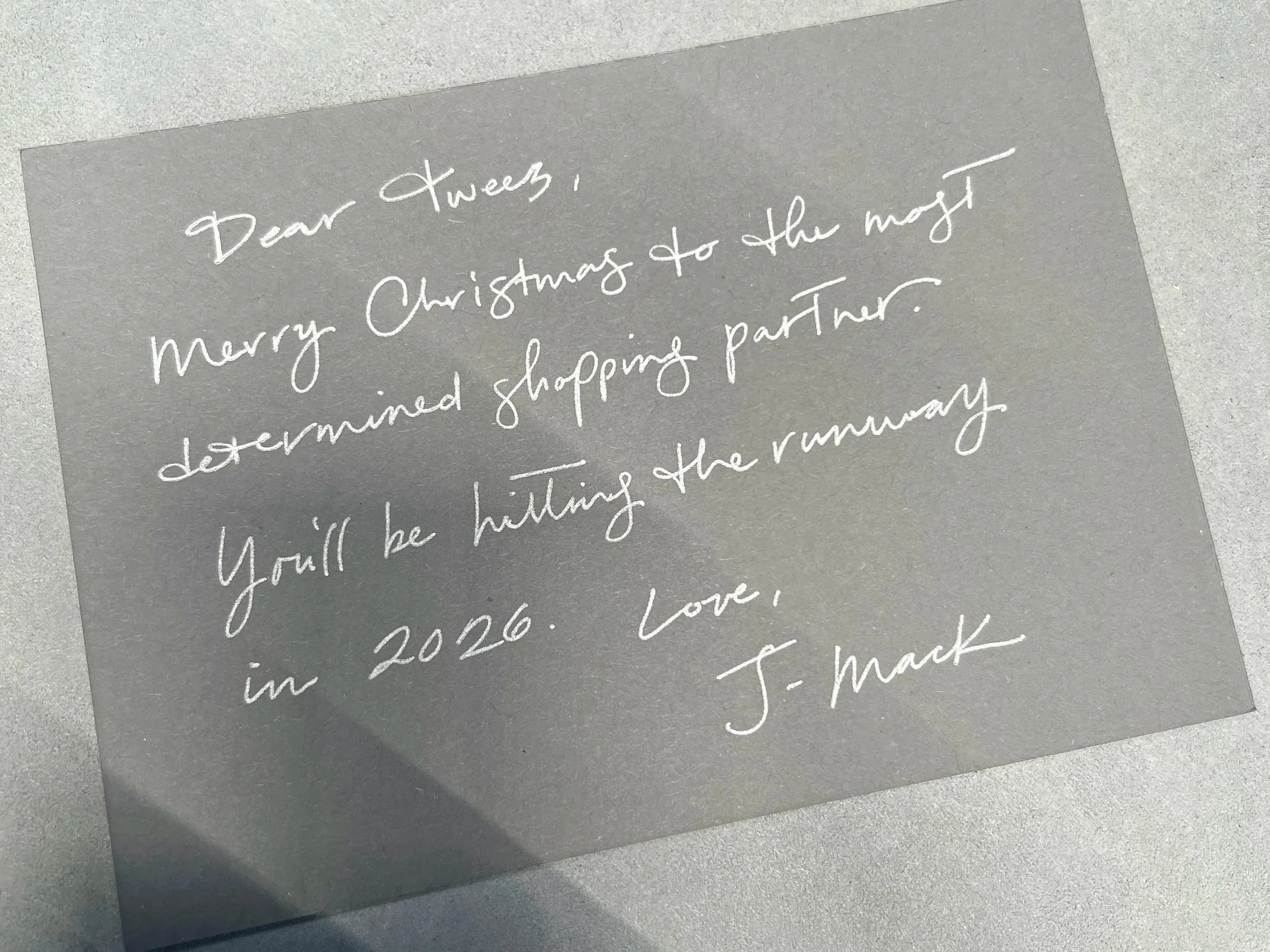
Being a professional calligrapher means that our “desk” can look quite different from day-to-day. Some mornings, I am at my home studio, surrounded by the quiet trinkets and reminders of loved ones. Other days, I am positioned under the bright floodlights of a high-traffic retail space, where the world moves at a different pace (hey, that rhymes!) Our craft is versatile that way. Mostly anything can be a desk, especially if pen and paper are on-hand.
More Than a Scribe
A recent event had me reflecting on our role as calligraphers. A scribe’s role traditionally was always to copy and preserve manuscripts. In a way, being a live-event artist is the same. We act as the "middle penmen" between a guest and the giftee—penning messages of joy, comfort, or celebration on behalf of another.
But I’ve come to realize that we are more than just scribes. We aren’t just communicating a message; we are often capturing a note that has never been committed to paper before—or a message someone doesn’t have the literal words to say (more on that later). And we get a glimpse into relationships, making calligraphy that much more meaningful. Let me explain.
Capturing Memories in Real-Time
I was recently at an event etching a custom fragrance when a guest asked for an accompanying note for her husband. When she asked if I could translate her message into English as I wrote it, I was momentarily taken aback. The answer was a resounding yes—Spanish is my native language, after all—but no one had ever asked me to translate and scribe simultaneously.
She wrote her heart out in Spanish, and I translated her words into silver ink on a beautiful note card. She spoke of her gratitude for her husband and the journey they had taken together. As I handed the card back, I saw a visible sense of relief in her—the peace of knowing her sentiment had been captured with the elegance it deserved. It felt like a meaningful, personal moment that went beyond just calligraphy. After 10+ years of studying calligraphy, I’ve learned that the technical side—the ink flow, the slant of the nib, the pressure of the hand—is only half the work. The other half is the empathy required to hold space for someone else’s story.
The Art of Human Connection
And that’s when it really hit me. Calligraphy isn’t just pretty handwriting. It’s a physical manifestation of love and gratitude. And that is incredibly meaningful.
When a guest approaches your table, they often ask you to write things they might never say out loud. It’s a "thank you" to a mentor, a "remember when" to a childhood friend, or a "you look beautiful" to a partner. And what a blessing it is to be a part of that moment. Praise Jesus.
It is a beautiful reminder that beneath every event is a fundamental need for connection, and as scribes, we are the ones blessed to help bridge that gap. In the middle of a high-traffic retail activation, where the world is moving fast under floodlights, these 30 seconds of connection are what guests remember. It transforms a 'gift with purchase' into a lifetime keepsake.
At the end of the day, guests may not remember the specific ink color or the paper weight—but they will remember how it felt to see their name and their story honored. And that’s why at the end of the day we’ll always choose calligraphy. And we hope that you do too.